
White limestone, caves and a beech forest over the sea
A national park of a hundred and eighteen thousand hectares, islands included.
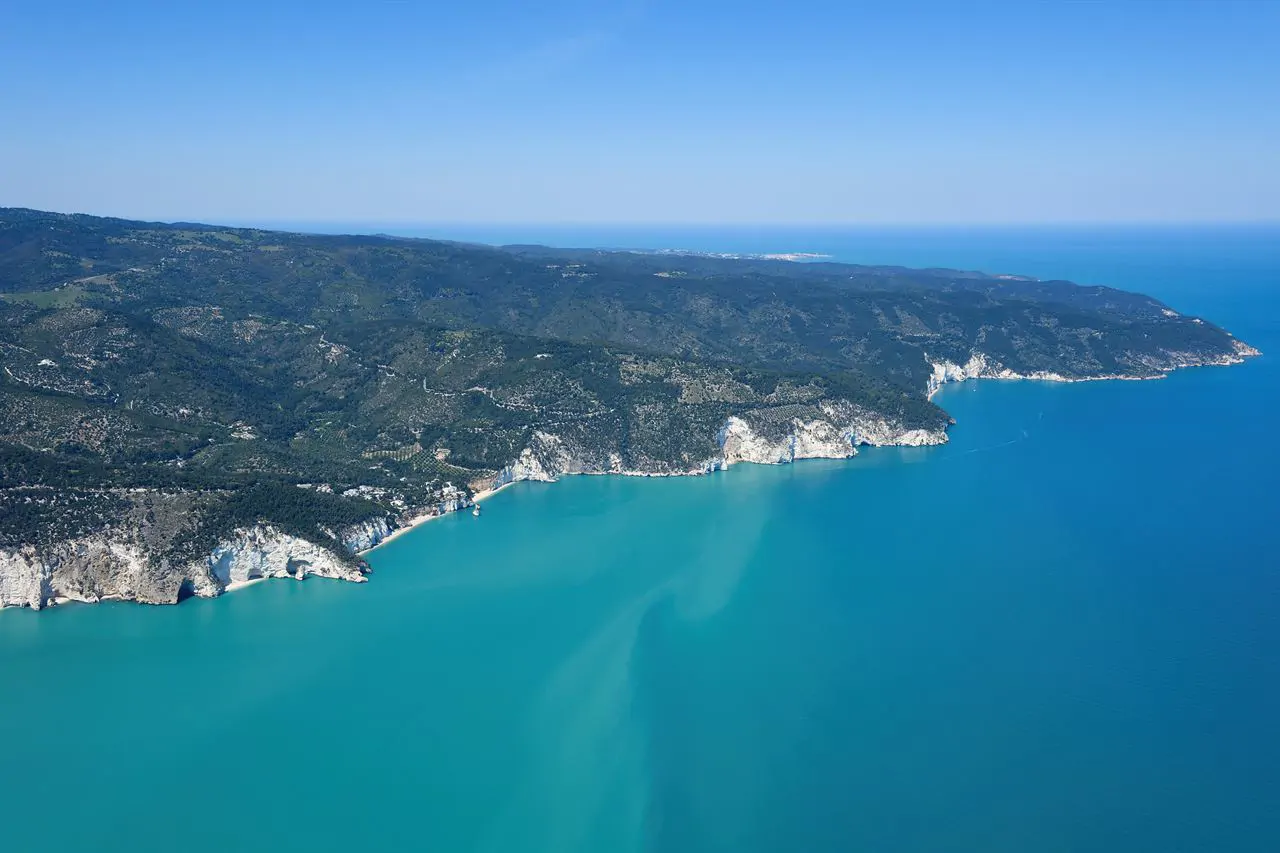
The Gargano is an isolated limestone massif, geologically closer to the Dinarides than to the Apennines. The rock is permeable and the water disappears into it: hence the dolines of the plateau, the sea caves along the coast and the almost total absence of surface rivers. Since 1991 nearly the whole promontory has been a national park.
The coast
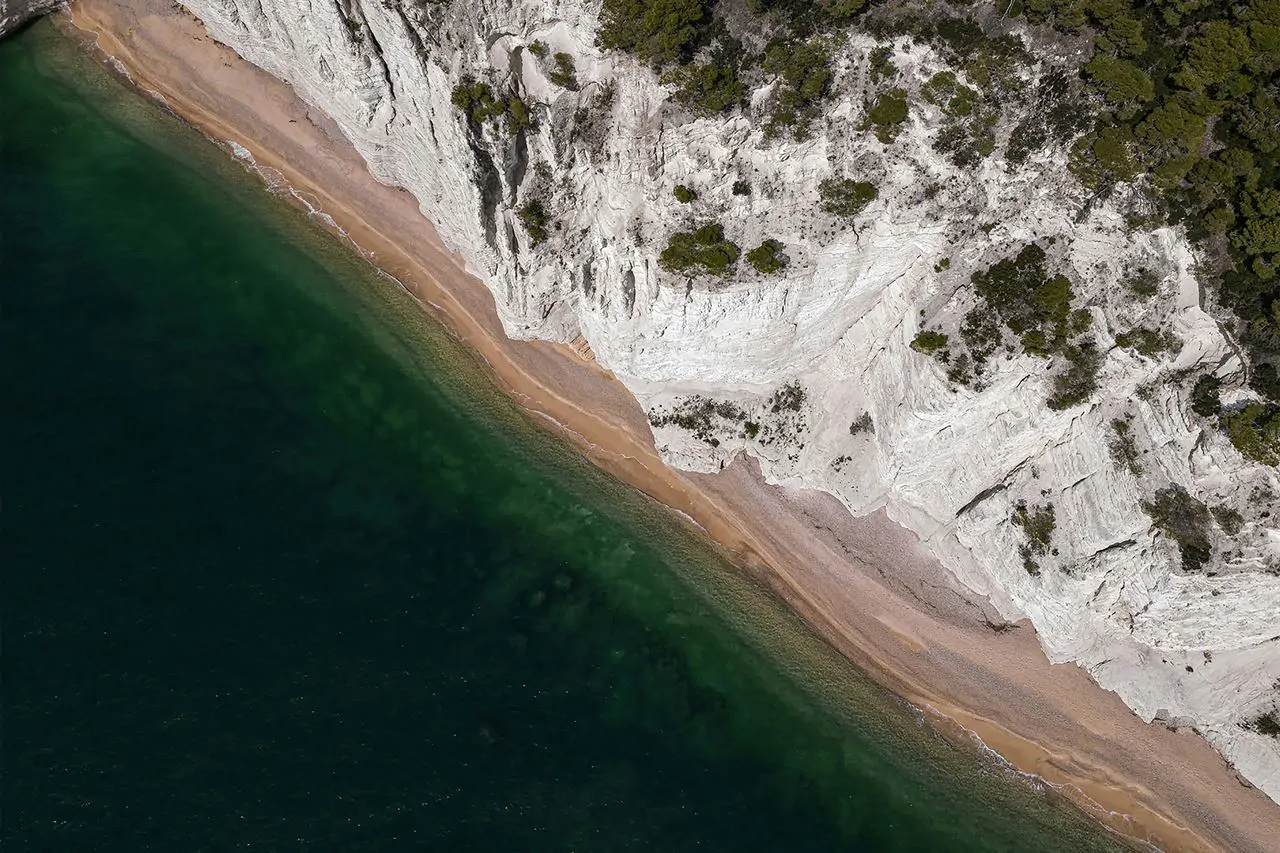
From Vieste towards Mattinata the coast is one white cliff after another falling sheer, with shingle coves reachable only on foot or by boat: the Baia delle Zagare with its stacks, Vignanotica, the Cala della Sanguinaria. To the north, instead, the beaches lengthen and turn to sand, with the pine woods behind and the campsites inside them.
The caves
The stretch between Vieste and Mattinata has dozens of sea caves cut by the water into the limestone: the Campana, the Due Occhi, the Grotta Sfondata, the Grotta Smeralda. They can be visited only from the sea, on the boats that leave Vieste harbour every morning; the trip takes three hours and into some you really go, at others you look from outside.
The interior and the forest
Above five hundred metres the landscape changes completely: the plateau is pasture, dry stone walls and dolines, and the villages sit on top. The Foresta Umbra covers ten thousand hectares of beech, oak and maple, and it is the only wood of its kind so close to the sea in Italy. Its oldest beech stands have been a Unesco site since 2017.
The lakes and the islands
On the northern side are Lake Lesina and Lake Varano, two lagoons separated from the sea by a sand bar: Varano, at sixty square kilometres, is the largest lake in southern Italy, and it is a place of fishing and migrating birds. Twenty miles offshore lie the five Tremiti islands.